
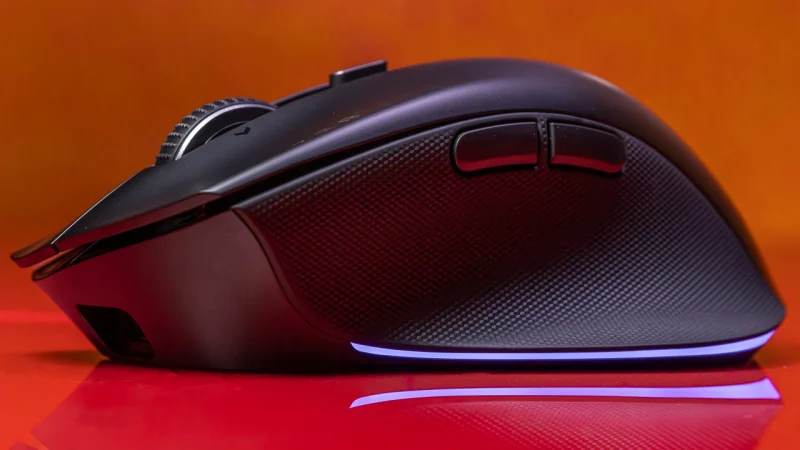
In 2025 the computer mouse is one of the most important instruments for productivity, precision in terms of creativity, performance, and precision. If you’re at home, playing in a competitive game or creating graphics, or simply surfing the internet, selecting the appropriate mouse will significantly affect your comfort and performance.
This guide explains all you must know about computer mice, from different types of attributes to what you need to consider when choosing the most appropriate one for your requirements, top use-case suggestions and the best buying tips to can help you make a wise and long-term decision.
Table of Contents
- What Is a Computer Mouse?
- Why the Right Mouse Matters in 2025
- Types of Computer Mice
- Wired Mice
- Wireless Mice
- Bluetooth Mice
- Gaming Mice
- Ergonomic Mice
- Vertical Mice
- Trackball Mice
- Key Features to Look For
- Sensor Type (Optical vs Laser)
- DPI and Sensitivity
- Programmable Buttons
- Adjustable Weights
- Wireless Technology
- Build Quality & Materials
- Choosing a Mouse Based on Your Use Case
- Best for Work & Productivity
- Best for Gaming
- Best for Graphic Design & Editing
- Best for Students & Everyday Use
- Best for Portability
- Wired vs Wireless: Which is Better?
- Comfort & Ergonomics: Why It Matters
- Common Mistakes to Avoid When Buying a Mouse
- How to Maintain and Care for Your Mouse
- Future Trends in Mouse Technology
- Frequently Asked Questions (FAQs)
- Final Takeaways
1. What Is a Computer Mouse?

Computer mouse are hand-held input device that regulates the motion of the cursor’s screen. It’s among the most important peripherals used to interact with computers, providing accuracy and control that is far greater than the capabilities of a touchpad.
Today’s advanced mice offer a range of features–including customizable buttons, adjustable sensitivity, ergonomic shapes, and wireless connectivity–designed to improve comfort, speed, and productivity.
2. Why the Right Mouse Matters in 2025

It is easy to think that all mice are similar however, choosing the right one will dramatically alter your experience.
Imagine editing photos using a mouse that does not respond or is slow to respond. Also, playing with a mouse that does not respond quickly enough. Also, working for hours on the wrong design, which results in wrist discomfort. What happens? Fatigue, frustration, and loss of productivity.
A top-quality mouse lets you play smarter, work harder and accomplish more with less effort and stress.
3. Types of Computer Mice
Wired Mice
Wired mice are connected to your computer via USB. They are usually more responsive and reliable due to the fact that they don’t require batteries or are connected directly to your computer.
Pros:
- Instantly responsive
- No battery required
- Typically, they are more than
Cons:
- Cables can clutter your desk
- A limited range of movement
Ideal for: Gamers, professionals or budget users
Wireless Mice
Wireless mice are connected via either a USB receiver (RF) or Bluetooth. They provide more freedom of movement.
Pros:
- Setup that is clutter-free
- Simple to use on many devices
- Good selection
Cons:
- Battery or charging
- May have a slight delay on models with low-quality components.
Great for: Everyday use, office work, and students
Bluetooth Mice
Bluetooth mice can be connected directly to the device’s Bluetooth system.
Pros:
- No dongle required
- Easy pairing
- Ideal for tablets and laptops.
Cons:
- Some devices may need Bluetooth support
- A little more battery usage than the RF
Best For: Portable devices, minimalist setups
Gaming Mice
Gaming mice are engineered to provide speed and precision. They typically include buttons that can be customized as well as adjustable weight systems. advanced sensors as well as high-DPI (dots per inch) settings.
Pros:
- Performance that is superior
- Customized button mapping
- More ability to respond
Cons:
- Price increase
- A lot of features for use in casual situations
Ideal for: Gamers and Esports players
Ergonomic Mice
Ergonomic mouse designs focus on comfort and ease of use, while reducing strain. They are made to conform to the natural form that your hands have.
Pros:
- Reduces wrist inflammation
- Allows for long hours of usage
- Usually, they are special or vertical shapes
Cons:
- It takes time to adjust to
- Not the best choice for gaming that requires speed.
Ideal for: Office workers, those who have wrist strain
Vertical Mice
Vertical mice place your hand in an armshake position, thus reducing the rotation of your forearm.
Pros:
- Excellent wrist support
- Reduces strain during long sessions
Cons:
- It could take a while to get used to
- Not appropriate for everyone.
The Best for: Users with repetitive strain injuries or discomfort
Trackball Mice
The ball of a trackball mouse that remains stationary as you move it using your fingers or thumb.
Pros:
- Reduces the movement of arms
- Great for limited desk space
Cons:
- This can be a challenge to master.
- Gaming setups are not as common.
is ideal for: Precision tasks, restricted desk configurations
4. Key Features to Look For
Sensor Type: Optical vs Laser
Sensors with optical capabilities make use of LEDs and work well on all types of surfaces.
Laser sensors make use of laser technology and can be tracked on a variety of surfaces.
For most users, optical sensors deliver excellent performance.
DPI and Sensitivity
DPI is the measure of how far your cursor is moving on the screen compared to your mouse’s movement.
- low DPI (800-1600): Better for general use
- High-DPI (1600plus): Faster cursor movement, perfect for design and gaming.
Adjustable DPI is a huge advantage as it allows you to change modes based on the task at hand.
Programmable Buttons
Extra buttons can be used to add shortcuts to:
- Copy/Paste
- Control of volume
- Switching weapons (gaming)
- Custom macros
Ideal for productivity and gaming alike.
Adjustable Weights
Certain mice allow you to alter the internal weights so that the mouse more or less heavy.
Who is the beneficiary?
- Gamers
- Designers who favor a the custom balance
Wireless Technology
Find:
- Bluetooth 5.0+
- Low-latency wireless receivers
- Rechargeable batteries
Technology for wireless in 2025 has been improved to compete with wired performance.
Build Quality and Materials
It should be sturdy, not fragile.
- Quality switches (for long-lasting)
- Textured grips
- Durable coating
These variables affect comfort as well as longevity.
5. Choosing a Mouse Based on Your Use Case
Best Mice for Work & Productivity
Check for:
- Comfortable ergonomic design
- Battery life is long, or you can wire it.
- Adjustable DPI to accommodate multiple display setups
Best Mice for Gaming
Gaming mice must include:
- The High DPI band (up up to 16,000 and more)
- Custom RGB lighting (optional)
- Low latency
- Buttons that can be programmed
- Rubber grips to control the movement
Best Mice for Graphic Design
Designers can benefit from:
- Precise sensors
- Adjustable DPI
- Extra buttons to make shortcuts
- A comfortable shape that is ideal for long sessions
Best Mice for Students & Everyday Tasks
For general use, you need:
- Price that is affordable
- Easy plug-and-play
- Tracking that is reliable
- Form-fitting and comfortable
Best Mice for Portability
The portable mice are:
- Lightweight
- Small footprint
- Often Bluetooth
- Perfect for travel
6. Wired vs Wireless: Which is Better?
In 2025 the world of wireless mice will close the gap considerably. Here’s a quick analysis:
Wired Mice
- Lower latency
- There’s no battery issue to worry about.
- Usually, the cost is lower
Wireless Mice
- Freedom of movement
- Cleaner and more organized setup
- Simple multi-device use
Pick wired for maximum performance, select wireless for ease of use.
7. Comfort & Ergonomics: Why It Matters
Incorrect ergonomics can cause:
- Wrist pain
- Repetitive strain injuries
- Fatigue
- Productivity is reduced
Check for:
- Contoured shapes
- Thumb rests
- Lightweight construction
- Natural hand position
A comfortable mouse pays dividends in time.
8. Common Mistakes to Avoid When Buying a Mouse
Mistake 1: Choosing Based on Design Alone
A fashionable mouse may not be the most comfortable.
Mistake 2: Ignoring Sensor Quality
Low-quality sensors can affect the accuracy of.
Mistake 3: Not Checking Compatibility
Some mice do not work with older systems.
Mistake 4: Overlooking Battery Life
Wireless mice require good battery life.
Mistake 5: Buying Without Trying
When you can, test the button and grips.
9. How to Maintain and Care for Your Mouse
- Make sure you clean frequently
- Make sure to avoid sticky residue on buttons
- Keep sensor area dust-free
- Securely store the items when not when not in use.
- Replace batteries as needed
A proper care routine extends the lifespan of your mouse, and helps keep the performance of your mouse constant.
10. Future Trends in Mouse Technology
2025 and beyond anticipate:
- More AI-assisted control
- Gesture recognition
- Advanced tactile feedback
- Materials that are eco-friendly
- The buttons are adaptable and can be customized digitally.
The mouse of the future is smart and comfortable. It is also customizable.
11. Frequently Asked Questions (FAQs)
Q: Can gaming mice work with normal computer systems?
A Gaming mice are compatible with any type of computer, they just have more features.
Q Does wireless have a slower response as wired?
A Modern wireless is about the same in its responsiveness, and is especially suitable for use in everyday life.
Q: Does a mouse help lower wrist strain?
A Yes. Ergonomic and vertical mouse are designed to lessen the strain the wrist.
Q What is the best DPI for design?
A Adjustable DPI ranging between 800 and 4000 is perfect to ensure design accuracy.
Q Do Bluetooth mice drain your laptop batteries?
A Bluetooth is a low-cost battery–it’s optimized to work efficiently in 2025.
12. Final Takeaways
The ideal mouse will depend on your preferences, tasks and your level of your level of comfort.
Remember:
- The focus should be on the quality of sensors and ease of use
- Choose wireless if you value freedom
- Choose wired if you demand responsiveness
- Search for features that complement your workflow
The right mouse increases productivity, eases stress, and enhances the quality of your computing experience.


