
In today’s rapidly-changing digital environment companies are always looking for flexible, secure, affordable and scalable methods for managing data as well as running their applications. Traditional computing systems that have all resources are located on site have their limitations. Purely public cloud solutions come with challenges, such as security concerns or unpredictability of costs. This is why cloud solutions that are hybrid cloud can be distinguished as an approach to strategic planning that blends two worlds.
In this complete guide we’ll cover:
- What is the hybrid cloud?
- How does it work
- Advantages and benefits of key aspects
- Real-world examples of use
- Common problems and solutions
- Best practices to adopt hybrid cloud
- The future of hybrid cloud technologies
At the end of this article, you’ll comprehend how hybrid cloud solutions are now important for companies of all size.
What Is the Hybrid Cloud? A Clear, Simple Definition

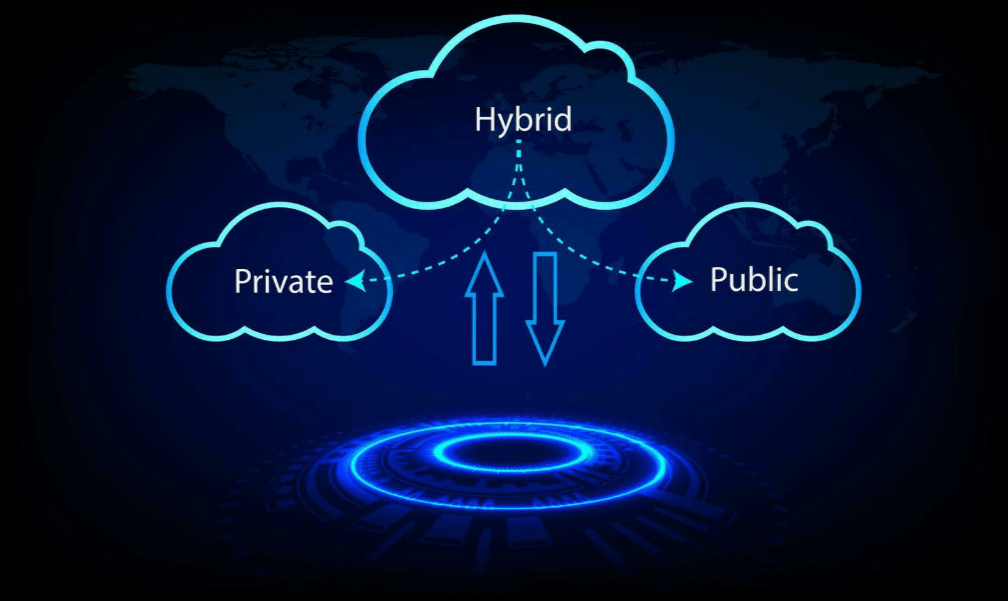
A hybrid cloud is a computing system that blends two or more kinds of cloud servicesgenerally, private cloud and public cloud — and enables applications and data to be moved between the two.
This is how it works in the simplest terms:
- The term “public cloud” is a term used to describe computing resources that are hosted and managed by third-party service providers. They are accessible via the internet and shared by several users.
- Private clouds is a term used to describe dedicated computing resources utilized exclusively by one company whether on-site or hosted by a service provider in a controlled environment.
The hybrid cloud combines these two cloud environments to ensure they can work seamlessly. This means that workloads can be moved between the public and private cloud platforms based on the requirements such as security, cost or performance.
In the end, hybrid cloud allows companies to benefit from flexibility, efficiency, and better control of their resources.
Why Hybrid Cloud Matters: The Big Picture

It is possible to ask: “Why not just use public cloud or private cloud alone?” The solution lies in the needs of modern enterprise applications and management of data:
- Performance requirements differ Certain workloads require high-performance close to hardware or users.
- Costs are critical The cost of running everything in public cloud can cost a lot of money.
- Security and conformity Data that is sensitive typically requires stronger security measures in private settings.
- Flexibility and scalability traffic increases or seasonal demand need flexible scalability, which the public cloud services provide.
- Pressure for innovation organizations seek to incorporate new technologies without disrupting their core systems.
The hybrid cloud provides organizations with the ability to put their applications where they have the greatest value. It is a combination of the benefits of reliability, cost-efficiency and innovation in a single strategy.
How Hybrid Cloud Works: The Technical Side (Simplified)
A hybrid cloud typically includes the following features:
1. Public Cloud Infrastructure
These are the services offered over the internet by cloud providers. This is ideal for workloads that vary or applications that have to expand quickly.
2. Private Cloud Infrastructure
In the secure data center this type of environment provides complete control over both software and hardware and is ideal for highly sensitive data or mission-critical systems.
3. Connectivity Between Clouds
Wireless networks as well as virtual private networks and secure connections permit applications and data to transfer between private and public spaces safely and effectively.
4. Management Tools
Companies use tools that are specialized to manage workloads, track efficiency, automate processes and manage resources across both cloud.
Together, they make up a whole environment that:
- Data can safely flow between systems
- The work load is placed in the place that makes most sense.
- Resources are optimized for efficiency and cost
This balanced approach allows businesses to adapt quickly to changing requirements.
Top Benefits of Hybrid Cloud Environments
Hybrid cloud architectures provide powerful benefits that can help businesses improve, grow and remain ahead of the competition. Here are the main advantages, which are explained in detail:
1. Flexibility and Scalability
One of the main benefits that hybrid clouds offer is the flexibility.
- Companies can manage their regular tasks in a cloud that is private for greater control.
- They can transfer the burdensome or unpredictable workloads to the cloud as necessary.
- This permits on-demand scaling with no any upfront hardware expense.
For instance, online shopping platforms can help keep customer order data safe in private systems, while also using cloud resources that are accessible to the public during the peak shopping season.
2. Cost Optimization
Controlling costs is a key aspect of cloud strategy.
Clouds that are hybrid:
- The most predictable workloads can be run on efficient and cost-effective private networks.
- Growing demand or unpredictable demand can be controlled in the cloud computing without requiring extra capacity.
- The companies pay only for the resources they utilize in the public cloud, which means they avoid costly over-provisioning.
This dual approach creates the financial efficiency, but without sacrificing performance or reliability.
3. Enhanced Security and Compliance
Security is a top concern for the majority of organizations.
Hybrid cloud allows:
- Data sensitive to be kept within a secure infrastructure, that has strict security measures.
- Workloads that are less sensitive to be run in public settings.
This distinction helps organizations to meet the requirements of regulatory compliance for data security while making use of cloud-based power available to public.
4. Improved Reliability and Business Continuity
Hybrid cloud can help with strong strategies to recover from disasters due to:
- Workloads and data can be replicated between different environments.
- In the event that one of these environments fails the sensitive work can continue to run in another environment with no interruption.
- Recovery and backup processes are more efficient and resilient.
In essence, hybrid cloud enhances availability and provides continuity in the event of unexpected disruptions.
5. Better Performance Through Strategic Workloads Placement
Hybrid cloud can be optimized for work-placement:
- High-performance computing tasks are able to operate close to the place the place where data is.
- Public cloud can handle short-term surges, high-performance computational workloads and batch processing.
- Private cloud handles stable, long-term operations.
This leads to quicker processing speed, lower latency, and a better user experience.
6. Innovation Support and Agility
Hybrid cloud environments let teams to develop faster and more efficiently without risking disrupting the core business processes.
For instance:
- The development of new applications is possible and tested on the cloud.
- Once the components are stable, they can be moved to a private cloud.
- This allows experimentation to be more secure with less risk and a faster times to market.
7. Simplified Management Through Unified Tools
Contemporary hybrid cloud systems come with central management tools that
- Perform a performance audit
- Enable automation
- Monitor usage and cost
- Create dashboards for reporting and compliance.
These tools offer IT teams better access to and control of distributed system.
8. Long-Term Strategic Growth
Hybrid cloud models match the strategic goals of
- Digital transformation
- Global expansion
- Real-time analytics
- Machine learning and AI support
In providing a flexible infrastructure base, the hybrid cloud can help organizations adapt to the future and technological advances.
Common Use Cases for Hybrid Cloud Adoption
Hybrid cloud doesn’t have to be just a theory businesses utilize it in real-world operational scenarios. Here are a few examples of how it can be used:
1. Seasonal Workloads and Peak Demand
Companies that have a variable demandsuch as holiday shopping websitesutilize hybrid cloud to increase the capacity of resources only as needed to avoid long-term infrastructure costs.
2. Data Privacy and Compliance Requirements
Financial services, healthcare and government institutions typically keep sensitive data in private environments, while utilizing public cloud to perform analysis, reporting and other operations that are not sensitive.
3. Disaster Recovery and Backup
Hybrid cloud can provide solid backup strategies, as it replicates data across several environments. This helps ensure continuity in the event that one of the systems is damaged or fails.
4. Application Modernization
Older applications that aren’t ready to migrate fully to cloud services are able to be modernized incrementally by using hybrid strategies. Modern components operate in cloud environments, but the main systems remain private.
5. High-Performance Computing and Big Data
Tasks that require a lot of computing power can benefit from hybrid cloud distributionprocessing is done in the cloud while private data is stored on a controlled system.
Challenges of Hybrid Cloud and How to Address Them
Hybrid cloud is a powerful technology but has its own issues. Knowing this helps companies to plan better.
1. Complexity in Integration
managing two different environments requires a lot of care. To tackle this issue:
- Use unified management platforms
- Standardize the operation
- Set clear governance policies
2. Security and Compliance Risks
Although hybrid cloud improves the security of a system, it is also prone to integration issues that could pose a risks. The best practices are:
- Encrypting data during transport and in rest
- Utilizing access control and identity
- Monitoring networks constantly
3. Skills and Training Requirements
Hybrid cloud is a skillful workforce. Solutions are:
- Insisting on employee training
- Collaboration with experienced cloud providers
- Automating the process to deal with the demands of
4. Cost Visibility Challenges
Blended models may make it difficult to track the spending across various environments unless
- Financial monitoring tools are used by organizations.
- Establish policies for budgets and alerts for usage
Best Practices for Implementing a Hybrid Cloud Strategy
To reap the maximum benefits from hybrid cloud, you must follow these tried and true practices:
1. Begin with clear Goals
What is the goal of the organization to accomplish:
- Cost savings?
- More security?
- More rapid innovation?
The clear goals of the architecture guide decisions regarding implementation.
2. Assess Workload Requirements
Not all workloads need to move into the cloud. Take into consideration factors such as:
- Conformity requirements
- Expectations for performance
- Sensitivity to data
This is the way to determine whether workstations are to public, private or hybrid settings.
3. Standardize Connectivity and Integration Tools
Use standard protocols and tools to seamlessly connect different environments. Connectivity that is strong will:
- More efficient
- Lower latency
- Increased reliability
4. Implement Security From Day One
Security should be a part of the design and not just as a last-minute thought. Include:
- Firewalls
- Encryption
- Management of identities
- Monitoring solutions
5. Use Automation and Monitoring Tools
Automation reduces errors and increases efficiency. Monitoring tools can provide insights on performance, costs and security issues prior to when they turn into problems.
6. Train Teams for Hybrid Cloud Management
Spend money on training IT teams. A knowledgeable staff will ensure smoother operations and faster resolution of problems.
Real-World Examples of Hybrid Cloud Success
Many companies have embraced hybrid strategies, with tangible outcomes. They have reported:
- Rapider introduction of new services
- Improved cost management
- More performance of the system
- Increased compliance with regulations
- Greater flexibility in responding to market shifts
These real-life stories prove that hybrid cloud isn’t a trend that will be around in the future -it’s an actual practice.
The Future of Hybrid Cloud
Hybrid cloud is constantly evolving thanks to technological advances, including:
- Integrated edge computing
- AI-enhanced optimization of resource
- Deeper automation
- Advanced cybersecurity frameworks
The advancements in hybrid cloud make it even more flexible, intelligent and able to meet the needs of tomorrow.
Summary: Why Hybrid Cloud Is a Strategic Advantage
To summarize the benefits of hybrid cloud, it is:
- Flexibility without any compromise
- Controlling costs and maximizing effectiveness
- More security and better conformity
- Improved performance and reliability
- Innovation and growth support
It lets organizations place workstations in areas that provide the highest benefit while ensuring data is secure and the infrastructure optimized.
Hybrid cloud is not only a technological choice and not a tactical one that will help businesses stay competitive in today’s digital age.
Final Thoughts
Hybrid cloud computing has been changing how companies consider security, infrastructure costs, and growth. It combines the advantages of private systems and the flexibility and innovation of cloud-based public environments. This combination not only increases efficiency, but also allows businesses to react to disruption and new technologies and adapt to changing expectations of customers.
If you’re an IT manager, a business decision-maker or a student enthusiast understanding hybrid cloud opens ways to smarter, more flexible, and future-proof solutions.


